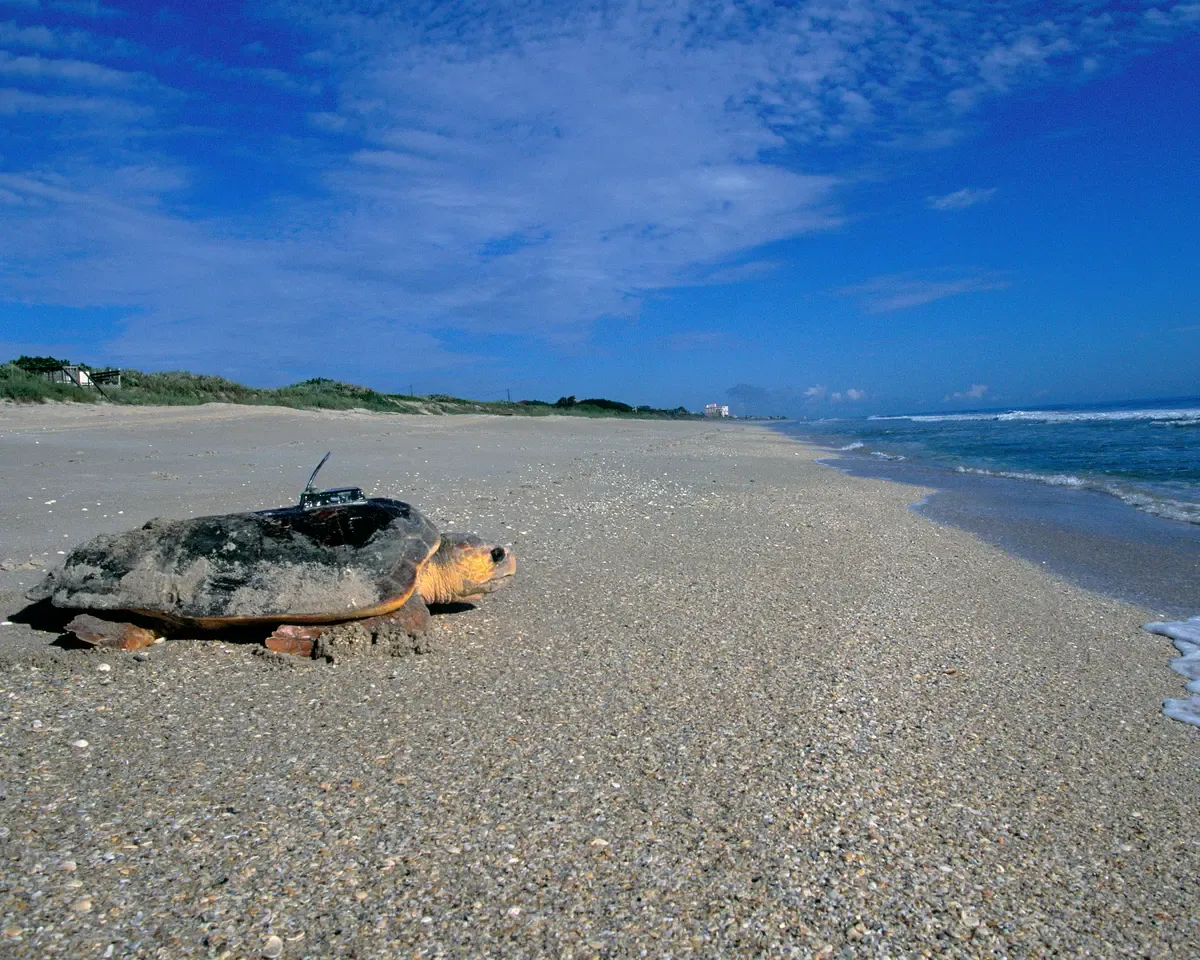
Sea turtle hatching season in Florida runs from about May to the end of October: nests laid from March onward hatch 45 to 75 days later, and the season officially closes on October 31. This guide covers the month-by-month calendar, how to watch nesting and hatching legally, where the permitted programs run, the rules on the beach and where to snorkel with turtles in Florida.
When Is Sea Turtle Hatching Season in Florida?
Sea turtle hatching season in Florida runs from about May through October. Nesting runs March to October and hatchlings emerge 45 to 75 days after the eggs are laid, so the first nests hatch in late spring and the last ones before the season closes on October 31. Nearly 90 percent of U.S. sea turtle nesting happens in Florida.
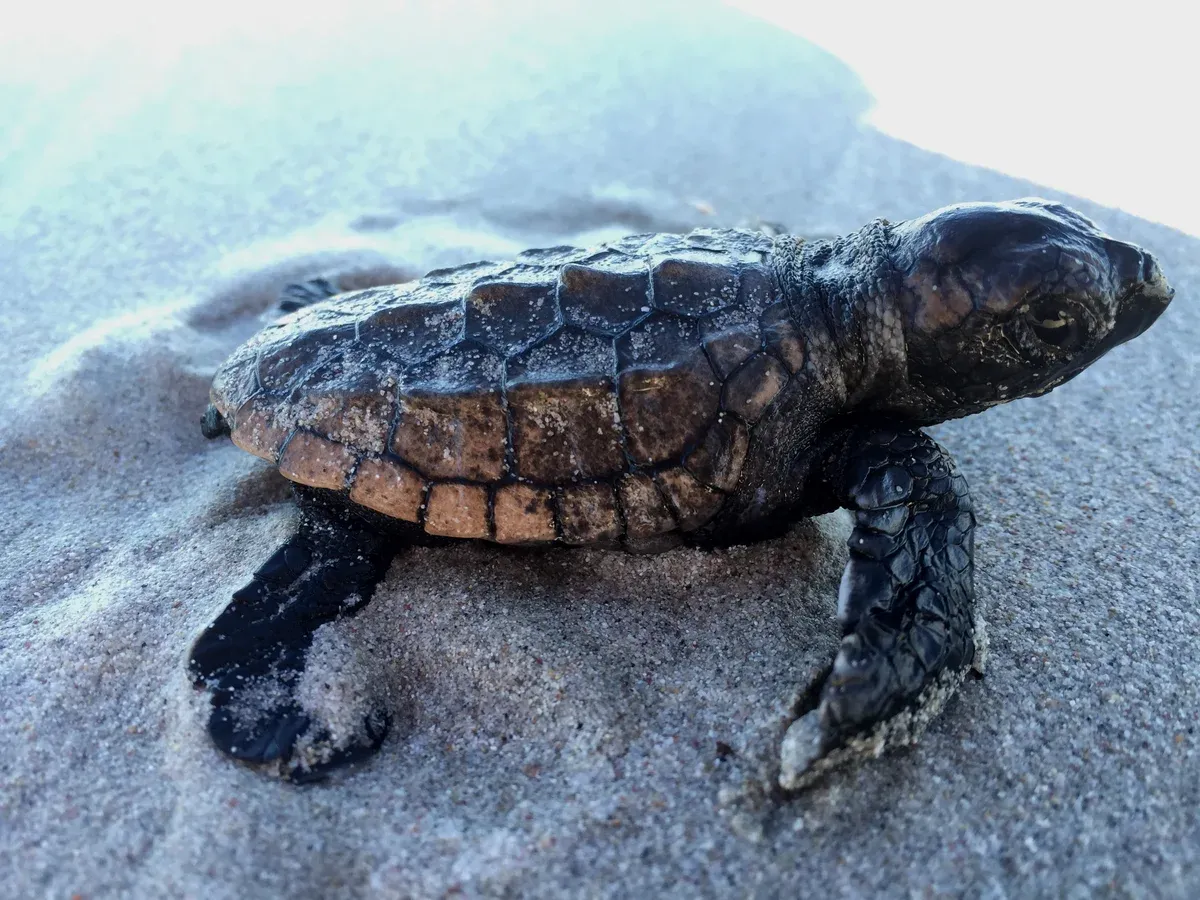
The season starts at different times along the coast. Sea turtles return to nest in March along the southeast Atlantic coast from Brevard County south to Broward County. On the Gulf Coast and north Florida beaches, nesting begins in April or May. On the Space Coast in Brevard County the season runs March 1 to October 31, and more than 53,000 nests were counted there in 2025 alone. Eggs hatch about two months after they are laid, and hatchlings emerge at night, using moonlight on the waves to find the sea.
Source: FWC, Visit Space Coast, Visit Florida.
Florida Sea Turtle Season Month by Month
Nesting, hatching and the programs you can book do not overlap neatly, so plan by month.
This table compares what happens on Florida beaches each month of sea turtle season with the permitted programs you can book for that month.
| Months | On the beach | What you can book |
|---|---|---|
| March | Nesting starts on the southeast Atlantic coast | Nothing to book yet. Look for nesting tracks on a sunrise beach walk |
| April-May | Gulf Coast and north Florida nesting begins, Dania Beach turtle walks start from mid-May | Mizell-Eula Johnson State Park turtle walks, Wednesdays and Fridays from 9:00 pm |
| June-July | Peak loggerhead nesting on the Atlantic coast | Permitted turtle walks on the Atlantic coast, including Juno Beach Tuesday to Saturday |
| July-September | Hatchling releases: Broward County typically July and August, Crandon Park July to September | Hatchling releases at Anne Kolb Nature Center Wednesday and Friday 8:00-10:00 pm, Crandon Park Thursday to Saturday 8:30-10:00 pm |
| October | Last nests of the season, season ends October 31 | Facility visits such as the Turtle Hospital in Marathon |
Book June or July for a nesting walk and late July through August for a hatchling release.
Source: NSU / Broward County Sea Turtle Conservation Program, Loggerhead Marinelife Center.
Can You Watch Sea Turtles Hatch in Florida?
Yes, through permitted hatchling releases and nest hatch-success evaluations run at night by FWC Marine Turtle Permit Holders. Pre-registration and tickets are required for the public releases.
A wild emergence, where you simply stumble on a nest boiling with hatchlings, is luck. The reliable way is a public hatchling release such as the ones in Hollywood and Key Biscayne. All public programs start with an interpretive talk off the beach before anyone heads to the sand.
Reserve early: Loggerhead Marinelife Center takes only a small number of people per night under its state permit.
Source: FWC.
Where to Watch Sea Turtles Nest and Hatch in Florida
Permitted public programs run along the Atlantic coast from the Space Coast down to Miami-Dade. Each one has its own schedule and booking rules, so check details before you plan a night.
For a turtle experience any day of the year, visit the Turtle Hospital in Marathon in the Florida Keys, at mile marker 48.5 on the bay side. The non-profit rehabilitates sick and injured sea turtles and runs tours where you see turtles up close in any season.
This table compares the permitted places to watch nesting and hatching, their area, program and season.
| Place | Area | Program | When |
|---|---|---|---|
| Loggerhead Marinelife Center | Juno Beach | Public turtle walks, Tuesday to Saturday, 9 pm to midnight, reservations required | June and July (from June 1) |
| Canaveral National Seashore | Playalinda Beach | Permitted public turtle walks | June and July |
| Sebastian Inlet State Park | Vero Beach | Permitted public turtle walks | June and July |
| Sea Turtle Preservation Society | Melbourne Beach | Permitted public turtle walks | June and July |
| Gumbo Limbo Nature Center | Boca Raton | Permitted public turtle walks | June and July |
| John D. MacArthur Beach State Park | North Palm Beach | Permitted public turtle walks | June and July |
| Dr. Von D. Mizell-Eula Johnson State Park | Dania Beach | Turtle walks Wednesdays and Fridays from 9:00 pm, park admission applies | Mid-May to June |
| Museum of Discovery and Science | Fort Lauderdale | Turtle walks Tuesday to Thursday, 9:00 pm to 1:00 am | June and July |
| Anne Kolb Nature Center | Hollywood | Hatchling releases Wednesday and Friday, 8:00-10:00 pm | July and August |
| Crandon Park Visitor and Nature Center | Key Biscayne | Hatchling releases Thursday to Saturday, 8:30-10:00 pm | July to September |
Source: FWC, NSU / Broward County Sea Turtle Conservation Program, Loggerhead Marinelife Center.
What Is a Florida Turtle Walk Like?
A turtle walk starts with a talk, not a walk. Everyone gathers off the beach for an interpretive presentation while scouts search the sand for a nesting female. Only when scouts find one does the group head out. At Juno Beach the program runs officially 9 pm to midnight, and if no turtle is found by midnight it ends.
Groups number 20 to 40 people, and you must be able to walk a mile or two on soft sand. Most walks do not accept children under 8, though some take 6-year-olds. Fees run up to about $20 per person and some walks are free, but all require advance reservations. There is no guarantee you will see a turtle and no refunds if you do not. Walk participants watch loggerheads only, since leatherbacks and greens are not shown nesting. Juno Beach is one of the densest loggerhead nesting sites in the world, which helps the odds.
- Dark clothing
- Insect repellent
- Water
- Walking shoes
- No flashlights and no flash photos
Wear dark clothes and keep the phone flashlight off, since lights disturb nesting turtles and hatchlings.
Source: Visit Florida, Loggerhead Marinelife Center.
Is It Illegal to Pick Up Baby Sea Turtles in Florida?
Yes. Under Florida's Marine Turtle Protection Act (s. 379.2431), taking, disturbing, molesting or harassing any marine turtle, hatchling, egg or nest is a third degree felony, and offences involving eggs carry an extra $100 per egg.
Getting within 50 feet of a nesting turtle can cause her to leave before finishing, so keep well back. Never handle hatchlings, since they must reach the sea on their own. Report sick, injured or disoriented turtles to the FWC Wildlife Alert hotline at 888-404-FWCC (3922). For the rules in Hawaii, Mexico and other turtle destinations, read is it illegal to touch sea turtles.
Source: Florida Statutes 379.2431, FWC.
How to Keep Nests Safe on a Florida Beach
Most nests are marked with wooden stakes, and tracks in the sand are easiest to see on a sunrise walk. Your behaviour on the beach matters more than anything else.
- Turn off beachfront lights and use flashlights or phones only when necessary, since lights misdirect turtles and hatchlings
- Fill in holes before you leave
- Remove beach furniture and toys before sunset
- Tear down sandcastles at the end of the day
- Do not walk on the dunes
- Leave marked nests and their stakes alone
Source: FWC, Visit Space Coast.
Can You Swim With Sea Turtles in Florida?
Yes, but not from the nesting beaches, where turtles come ashore at night and are protected by law. The in-water option in Florida is a reef snorkel in Key Largo, home to the only living coral barrier reef in the continental US. Green and loggerhead turtles swim the reef as a bonus, not a guarantee, and summer brings the calmest, clearest water. The Key Largo: Coral Reef Snorkeling Trip costs from $81 and rates 4.5 from 238 reviews. Read more on how to snorkel with turtles in Key Largo.
If a near-sure turtle swim is the whole point of the trip, look beyond Florida. Swim with turtles in Akumal, where resident green turtles feed in the bay daily, or try swimming with turtles in Barbados. Our roundup of the best places to swim with turtles covers all 30 destinations.
In June or July you can fit a Key Largo reef snorkel and an Atlantic coast turtle walk into one Florida trip.
Source: FWC.
Florida Hatching Season: Quick Answers
What is the best time to see sea turtles hatch?
Hatchlings emerge 45 to 75 days after the eggs are laid, so hatching runs from about May through October, always at night. For a near-sure sighting, book a permitted hatchling release: they typically run in July and August in Broward County and July to September at Crandon Park.
How rare is it to see a sea turtle in Florida?
Seeing one is not rare in the right setting, since nearly 90 percent of U.S. sea turtle nesting happens in Florida. On a permitted turtle walk there is no guarantee you will see a turtle, and walks show loggerheads only. If no turtle appears by midnight at Juno Beach the program ends with no refund.
What month do sea turtles hatch in Florida?
The first hatchlings appear from around May, about two months after the first nests are laid in March on the southeast Atlantic coast, and hatching continues to the end of October. Public hatchling releases typically run in July and August in Broward County and from July to September at Crandon Park in Key Biscayne.
Do you need a reservation for a Florida turtle walk?
Yes, all turtle walks require advance reservations. Fees run up to about $20 per person, some are free, and hatchling releases need pre-registration and tickets too.
Which sea turtles nest in Florida?
Five species swim in Florida waters and nest on its beaches: loggerhead, green, leatherback, Kemp's ridley and hawksbill. The southeastern U.S. hosts the world's largest loggerhead nesting aggregation, and Florida is the only continental state where leatherbacks regularly nest.